Liraglutide for weight loss
Liraglutide can help you lose 8% of your body weight when paired with life style change
Written by: Dr. Justin Zaghi
Last updated: March 2026

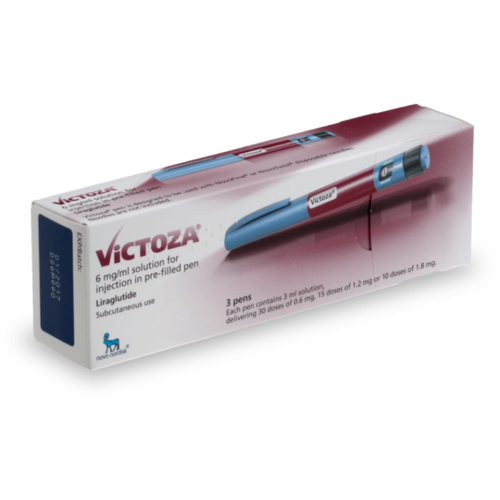
Table of contents:
ABOUT LIRAGLUTIDE
HOW TO GET STARTED
What is liraglutide?
Liraglutide is the active ingredient in the weight loss medication Saxenda and the diabetes medication Victoza. Liraglutide was first FDA-approved in 2010 for type 2 diabetes under the brand name Victoza and was later found to be beneficial for weight loss, achieving about 8% weight loss when paired with diet and exercise. As a result, liraglutide was FDA-approved in 2014 for chronic weight management as Saxenda. Saxenda and Victoza have the same active ingredient (liraglutide) though they are administered at different doses — Saxenda at 3.0 mg daily for weight loss and Victoza at up to 1.8 mg daily for diabetes.
How does liraglutide work?
Liraglutide is a GLP-1 receptor agonist, which mimics a hormone naturally produced by your intestines called GLP-1 (glucagon-like peptide-1). The medicine works by sending signals to the appetite center in your brain to reduce hunger. By slowing down gastric emptying, it also helps you to feel fuller for longer after meals. In addition, it has hormonal effects that improve your metabolism, specifically by stimulating insulin release and reducing glucagon from your pancreas, which helps control blood sugar levels.
What are the benefits of liraglutide?
Liraglutide has been shown to lead to sustained weight loss of about 8% in clinical trials. In the landmark SCALE Obesity and Prediabetes trial, 63% of patients lost at least 5% of their body weight, and 33% lost more than 10%. Weight loss can have significant benefits across many domains of your health, including sleep, mood, energy, and organ function. Studies show benefits including:
- A 13% reduction in major cardiovascular events (heart attack, stroke, and cardiovascular death) in the LEADER trial, and a 22% reduction in cardiovascular death among diabetics
- Improvements in diabetes and blood sugar control
- Improvements in cholesterol, blood pressure, and cardiometabolic risk factors
- Reduced progression of diabetic kidney disease, including macroalbuminuria
- Improvements in fatty liver disease (reduced liver fat content)
- Reduced risk of progression from prediabetes to type 2 diabetes
In short, liraglutide can have an incredible benefit on your health!
What side effects should I look out for?
The most common side effects are gastrointestinal in nature, including nausea, vomiting, diarrhea, and constipation. When these gastrointestinal side effects happen, they are typically mild in nature and generally subside over time, usually within 2–3 weeks. Nausea is actually considered an “on target” side effect of liraglutide because the nausea helps you to reduce your caloric intake and lose weight.
Liraglutide may cause other less common, but more serious, side effects. These include:
- Gallstones and pancreatitis (inflammation of the pancreas), especially when the weightloss is rapid
- Low blood sugar (hypoglycemia)
- Allergic reactions
- Kidney problems, especially if you’re very dehydrated
- Increased heart rate
- Depression or suicidal thoughts (monitor your mood and contact your provider immediately if you notice changes)
- Thyroid tumors or cancer (this has been noted in rodents, but not yet humans)
Who should avoid liraglutide?
People with any of the following conditions should not take liraglutide:
- A personal or family history of medullary thyroid carcinoma
- A personal history of multiple endocrine neoplasia syndrome type 2
- An allergic reaction to liraglutide or any of its ingredients
- Those currently taking another GLP-1 receptor agonist (such as semaglutide or tirzepatide)
- Pregnant women
How do I take liraglutide?
Liraglutide is injected under the skin in the abdomen, upper arm, or thigh. When taking liraglutide, make sure you rotate the injection site each day to reduce the risk of skin reactions. You can take liraglutide with or without food. Unlike semaglutide and tirzepatide, liraglutide is injected once daily — at the same time each day. It doesn’t matter whether you take it in the morning or at night, but try to be consistent. If you miss a dose, simply resume your once-daily regimen with the next scheduled dose. Do not take an extra dose or increase your dose to make up for the missed one. If more than 3 days have passed since your last dose, contact your Shapely provider, as you may need to restart at a lower dose.
What dose of liraglutide should I take?
Most patients will start at the lowest dose (0.6 mg per day) for one week, and then increase by 0.6 mg each week until reaching the full maintenance dose of 3.0 mg daily. This gradual increase helps minimize gastrointestinal side effects. If you have difficulty tolerating a dose increase, your Shapely provider may recommend staying at a given dose for an extra week before increasing. Make sure to attend your regular meetings with your Shapely provider, so that you can find the schedule that works best for you.
Below is the standard, FDA-approved dosing schedule for liraglutide:
Week 1
0.6 mg
Each day
Week 2
1.2 mg
Each day
Week 3
1.8 mg
Each day
Week 4
2.4 mg
Each day
Week 5+
3.0 mg
Each day (full dose)
What should I expect while taking liraglutide?
Because liraglutide slows down gastric emptying and signals your brain to be less hungry, you may feel fuller and naturally want to consume fewer calories. Many patients describe liraglutide as having an effect of reducing “food noise” or constant chatter and thoughts about food. You may also find a decreased desire to consume alcohol.
During the first week or two at the lowest dose (0.6 mg), there may be little to no weight loss. That dose is really intended to see how your body reacts to the medicine and to minimize side effects. As you increase the doses under the guidance of your Shapely team, you should expect to gradually lose weight. A healthy amount of weight loss is about 0.5–1% of your total body weight per week (usually 1–2 lbs for a 200 lb person), though weight loss may be greater when starting on treatment.
Your Shapely provider will evaluate your progress at 16 weeks. If you have not lost at least 4% of your baseline body weight by that point, your provider will work with you to adjust your treatment plan.
What foods should I avoid while on liraglutide?
While you don’t need to make any strict dietary changes while taking liraglutide, most people will find that they naturally want to consume fewer calories. In addition, improving the quality of your diet will only help to accelerate and sustain your weight loss.
Occasionally, liraglutide can increase symptoms of heartburn. If you have a history of heartburn, it’s recommended to avoid high-fat foods, like fried or greasy foods, as well as spicy or acidic foods.
Sometimes, patients will experience constipation while on liraglutide. As a result, it’s recommended to have a diet rich in fiber, as well as to consume plentiful water, as both can help minimize constipation.
Am I required to exercise while on liraglutide?
Exercise is not strictly required while on liraglutide, but it is strongly recommended! Many people who lose weight on liraglutide may also lose muscle mass. Doing exercise regularly will help ensure that you retain muscle mass and stay healthy.
We’re excited to help you achieve the best shape of you! For any additional questions on liraglutide, please reach out to your Shapely provider using the chat feature in Healthie. Or feel free to give us a call at 424-600-8360.
References:
- Pi-Sunyer X, Astrup A, Fujioka K, et al. A Randomized, Controlled Trial of 3.0 mg of Liraglutide in Weight Management. N Engl J Med. 2015;373(1):11-22.
- Davies MJ, Bergenstal R, Bode B, et al. Efficacy of Liraglutide for Weight Loss Among Patients With Type 2 Diabetes: The SCALE Diabetes Randomized Clinical Trial. JAMA. 2015;314(7):687-699.
- Marso SP, Daniels GH, Tanaka K, et al. Liraglutide and Cardiovascular Outcomes in Type 2 Diabetes. N Engl J Med. 2016;375(4):311-322.
- Mann JFE, Ørsted DD, Brown-Frandsen K, et al. Liraglutide and Renal Outcomes in Type 2 Diabetes. N Engl J Med. 2017;377(9):839-848.
- Armstrong MJ, Gaunt P, Aithal GP, et al. Liraglutide safety and efficacy in patients with non-alcoholic steatohepatitis (LEAN): a multicentre, double-blind, randomised, placebo-controlled phase 2 trial. Lancet. 2016;387(10019):679-690.
- Saxenda (liraglutide) [package insert]. Plainsboro, NJ: Novo Nordisk Inc; 2025.